
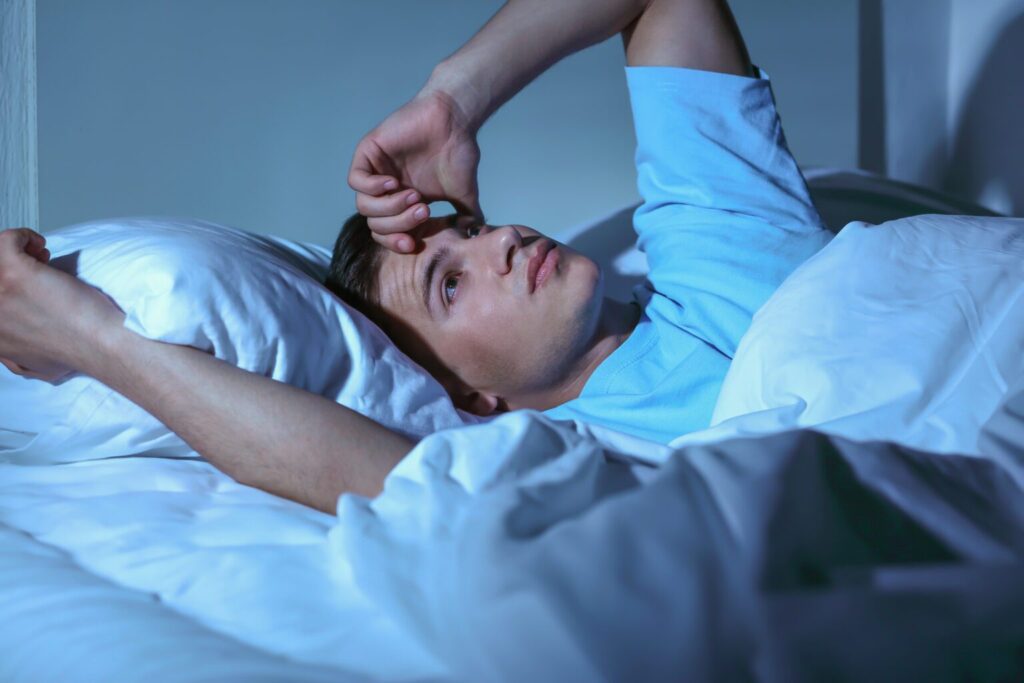
Sleep apnea is more than loud snoring or a restless night. When breathing repeatedly stops and starts during sleep, the effects reach far beyond the bedroom. At Jackson Family Dentistry in Downers Grove, we talk with patients regularly about how untreated sleep apnea can quietly affect nearly every system in the body, often long before someone realizes something is wrong.
What Actually Happens When You Stop Breathing at Night?
Obstructive sleep apnea occurs when the muscles in the throat relax too much during sleep, narrowing or blocking the airway. Each pause in breathing, even a brief one, drops oxygen levels and jolts the body into a lighter stage of sleep. This can happen dozens or even hundreds of times a night. The person experiencing it usually has no memory of waking up, but the body never gets the deep, restorative rest it needs. Left unaddressed, untreated sleep apnea puts the body through this cycle night after night, year after year.
How Does Untreated Sleep Apnea Affect the Heart?
One of the most serious consequences of untreated sleep apnea involves the cardiovascular system. Repeated drops in oxygen force the heart to work harder, and the stress hormones released during these episodes can raise blood pressure over time. Research has linked untreated sleep apnea to a higher risk of hypertension, irregular heartbeat, heart attack, and stroke. For patients who already have heart conditions, unmanaged sleep apnea can make those conditions more difficult to control.
Can It Affect Blood Sugar and Metabolism?
Yes. Untreated sleep apnea has also been connected to insulin resistance and a higher risk of developing type 2 diabetes. Fragmented sleep disrupts the hormones that regulate hunger and blood sugar, which can lead to weight gain, a factor that in turn can make sleep apnea worse. It becomes a cycle that is hard to break without proper diagnosis and treatment.
What About Mental and Cognitive Health?
The brain relies on quality sleep to consolidate memory, regulate mood, and stay sharp. Chronic sleep deprivation caused by untreated sleep apnea is associated with difficulty concentrating, memory problems, irritability, and a greater risk of anxiety and depression. Many patients describe feeling foggy or emotionally worn down without realizing their sleep is the underlying cause. Daytime drowsiness from untreated sleep apnea can also increase the risk of accidents, particularly while driving.
Does It Affect Oral Health Too?
Dentists are often among the first to notice signs of a sleep problem, because some of them show up in the mouth. Grinding and clenching at night, known as bruxism, frequently occurs alongside sleep apnea, and grinding wears down enamel and can damage existing dental work over time. The research has not established that sleep apnea causes the grinding, and the relationship may well run in both directions, but the two turn up together often enough to be worth raising when we see the wear.
Mouth breathing associated with sleep apnea can also lead to a dry mouth, which raises the risk of cavities and gum disease. During a routine exam at Jackson Family Dentistry, Dr. Jackson may notice these patterns and ask about how you are sleeping. We also have on-site cone beam 3D imaging, which lets us look at the airway itself, and that can be a useful part of the picture when we refer someone for a sleep study.
How Is Sleep Apnea Diagnosed and Treated?
If sleep apnea is suspected, the next step is a formal diagnosis, and that comes from a physician rather than from a dental exam. It usually means a sleep study, either in a lab or at home. Treatment then depends on the severity and, just as importantly, on what a person will actually use night after night.
CPAP reduces the number of breathing pauses more completely than anything else, and for severe sleep apnea it remains the first choice. For mild to moderate obstructive sleep apnea, and for patients at any severity who cannot tolerate CPAP or decline it, a custom oral appliance is an accepted alternative. These devices hold the lower jaw slightly forward to help keep the airway open through the night.
The comparison between the two is more interesting than it first appears. CPAP lowers the number of breathing pauses further. Oral appliances tend to get worn more consistently. Since any treatment only works on the nights you actually use it, the two can produce similar day-to-day results in alertness, blood pressure, and quality of life, even though the machine performs better on the measurements.
An appliance is prescribed by the sleep physician and made here in our office. After it is fitted, a follow-up sleep study confirms that it is doing what it should. Feeling better is not the same thing as the apnea being controlled, and that follow-up study is what tells you which of the two you have.
Is an Oral Appliance Right for Everyone?
Oral appliances are generally well tolerated, but they are not free of side effects, and they are not right for every patient. The early effects are usually mild and settle down: extra saliva or a dry mouth, tenderness in the teeth or jaw, and an odd feeling in the bite first thing in the morning. Those are common, expected, and manageable.
The one worth understanding before you start is slower to arrive. With years of nightly use, small changes in tooth position and in the bite itself can accumulate. They can begin to show within the first six months; they tend to build gradually rather than settle, and they are generally not reversible. Morning jaw exercises and a repositioning appliance are routinely used to limit this, and they do help the jaw recover each morning, but the evidence that they prevent the long-term change is thinner than the marketing around them suggests.
None of that is an argument against treatment. Untreated sleep apnea carries far more risk than a change in the bite. It is an argument for knowing what you are choosing, and for having your bite measured and monitored at every visit rather than noticed years later.
An appliance also needs a mouth that can hold one. That means enough healthy teeth, stable gums, and a jaw joint in reasonable shape. Untreated decay or gum disease would need to be addressed first. Appliances are not used for central sleep apnea, which is a different problem with a different cause.
Why Address It Sooner Rather Than Later?
The longer untreated sleep apnea goes unmanaged, the more strain it places on the heart, metabolism, brain, and even the teeth and gums. The good news is that treatment can make a real difference. Patients who begin managing their sleep apnea often notice improvements in energy, mood, and focus within weeks, along with long-term benefits for their overall health.
Ready to Talk About Your Sleep?
If you snore loudly, wake up feeling exhausted, or have been told you stop breathing during sleep, it may be time to bring it up at your next dental visit. At Jackson Family Dentistry, we are glad to talk through your symptoms, check for oral signs of sleep apnea, and help coordinate care with a sleep specialist when needed. Call our Downers Grove office today to schedule an appointment and start protecting your health, one good night’s sleep at a time.